How I Improved Local Search Visibility for a Hotel & Travel Business
In the hotel and travel industry, having a beautiful website is not enough to attract more guests. Travelers today usually begin their journey with a Google search. They search for hotels in a specific city, places to stay near popular attractions, affordable accommodation, things to do, restaurants, transportation, and many other travel-related questions before making a final booking decision. This is why local SEO can play such an important role in the growth of a hotel or travel business.
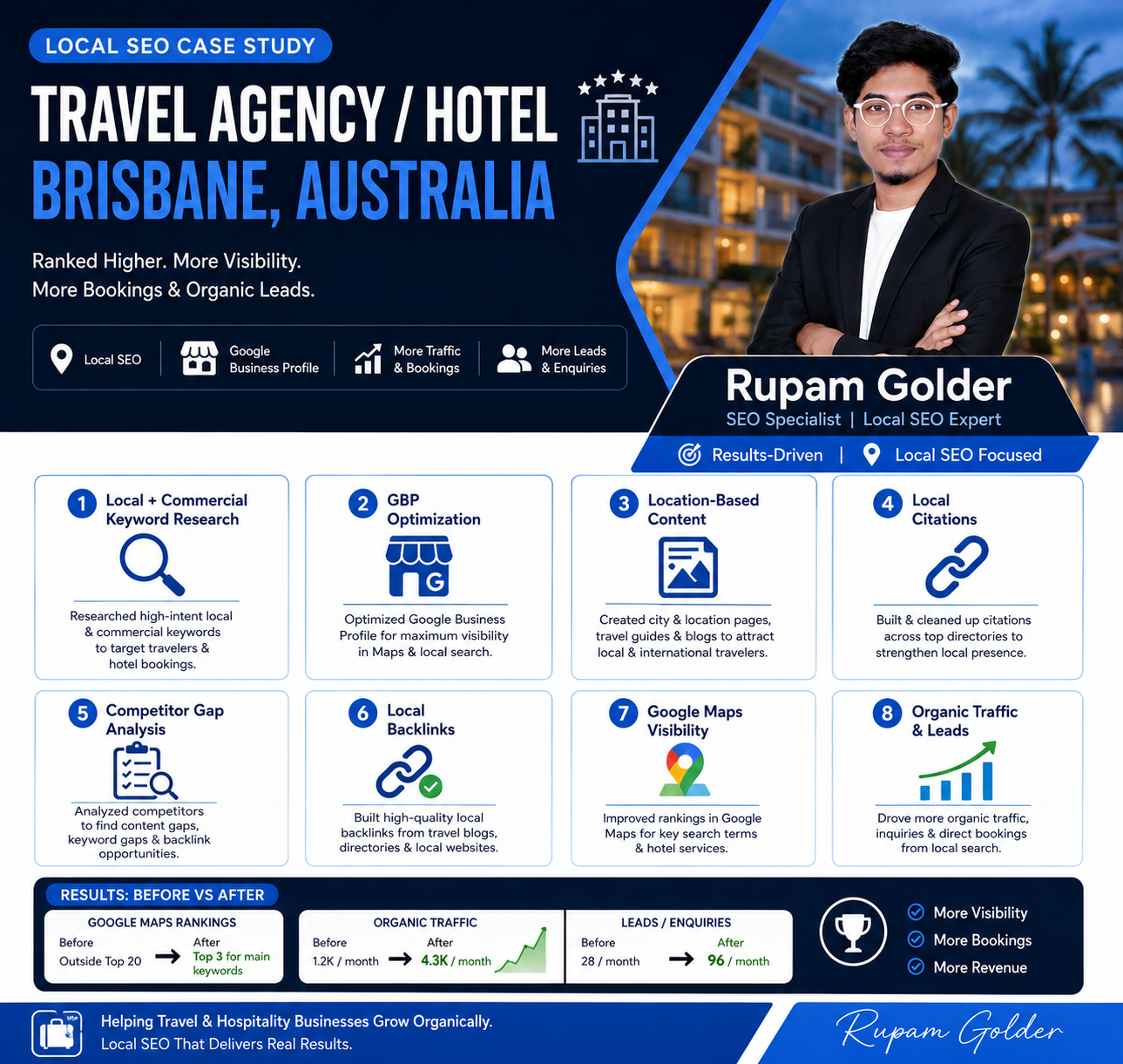
As an SEO professional, I, Rupam Golder, approached this project with a simple objective: to improve the business’s visibility in local search while creating a better search experience for potential travelers. Instead of focusing only on rankings, I wanted to build an SEO strategy that could connect the business with people who were genuinely interested in visiting the destination and looking for a place to stay.
Understanding the Real SEO Challenge
When I started analyzing the website, one of the main challenges was that the website was not taking full advantage of its local search potential. The business had a physical location and offered services that were highly relevant to travelers, but the website did not communicate its local relevance strongly enough.
A hotel website should not only tell visitors about rooms and prices. It should also help travelers understand where the hotel is located, what they can find nearby, how easily they can reach important attractions, and why the location is convenient for their trip. These details are important because travelers often make accommodation decisions based on location.
For example, a person searching for a hotel near an airport has a different requirement from someone searching for a hotel near a tourist attraction or a city center. Understanding these differences helped me develop a more focused local SEO strategy for the business.
Building a More Relevant Keyword Strategy
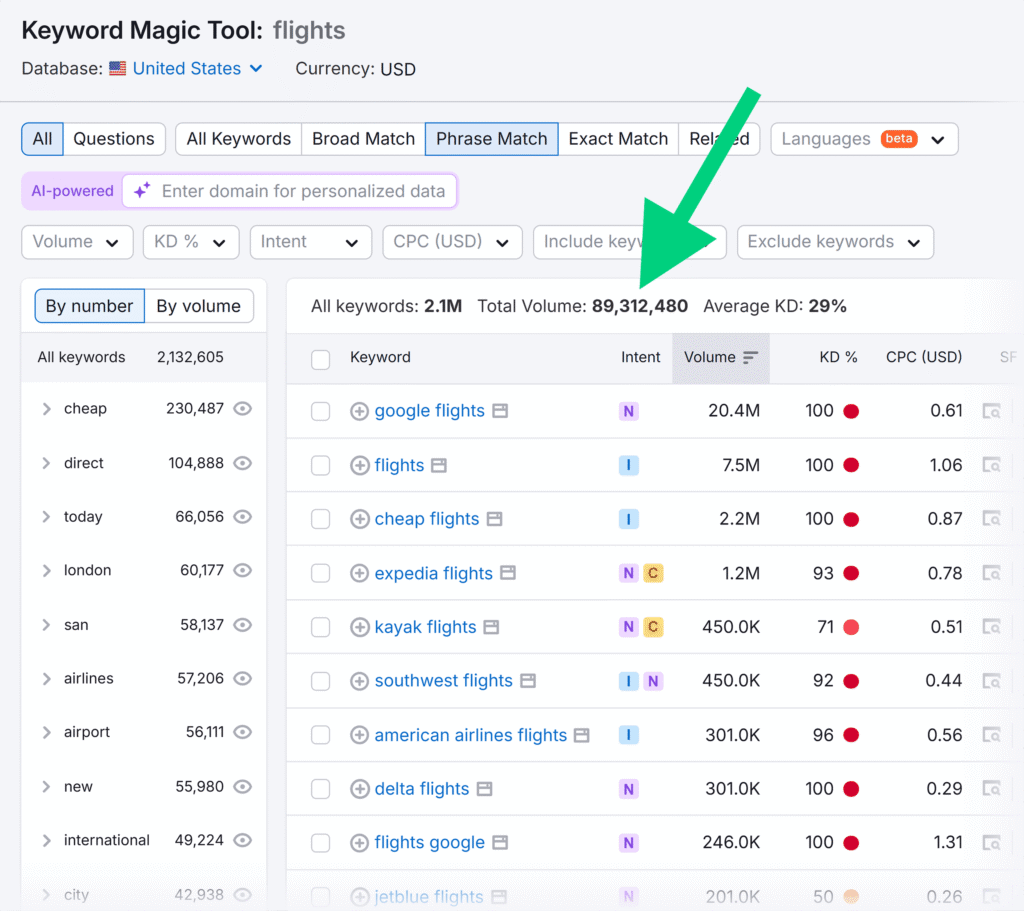
One of the first areas I worked on was keyword research. Rather than targeting only broad terms such as “hotel” or “travel,” I focused on understanding the actual phrases potential customers might use when planning their trip.
Searches such as “best hotel in [City],” “hotel near [Attraction],” “affordable hotel in [City],” and “places to stay in [Destination]” can represent strong commercial opportunities. At the same time, searches such as “things to do in [City]” or “best places to visit in [Destination]” can help reach travelers earlier in their decision-making process.
This difference in search intent was important. Someone searching for a hotel may already be close to making a booking, while someone searching for things to do may still be researching their destination. I wanted the website to have the opportunity to reach both types of users.
Making the Website More Local
After understanding the search behavior, I focused on improving the local relevance of the website. The goal was to make it clear not only that the business was a hotel, but also where it was located and why that location mattered to travelers.
The content was developed around the destination itself. Instead of simply mentioning the city name throughout the website, I focused on creating useful information about the surrounding area, nearby attractions, transportation options, and the overall experience a traveler could expect when staying at the hotel.
For example, if a hotel is located close to a popular tourist attraction, simply writing “our hotel is near the attraction” provides very little value. A more useful page can explain how far the attraction is, how guests can travel there, what other places are nearby, and why staying in that particular area may be convenient.
This type of content is valuable for both users and search engines because it provides genuine context around the hotel’s location.
Creating Content Around the Travel Journey
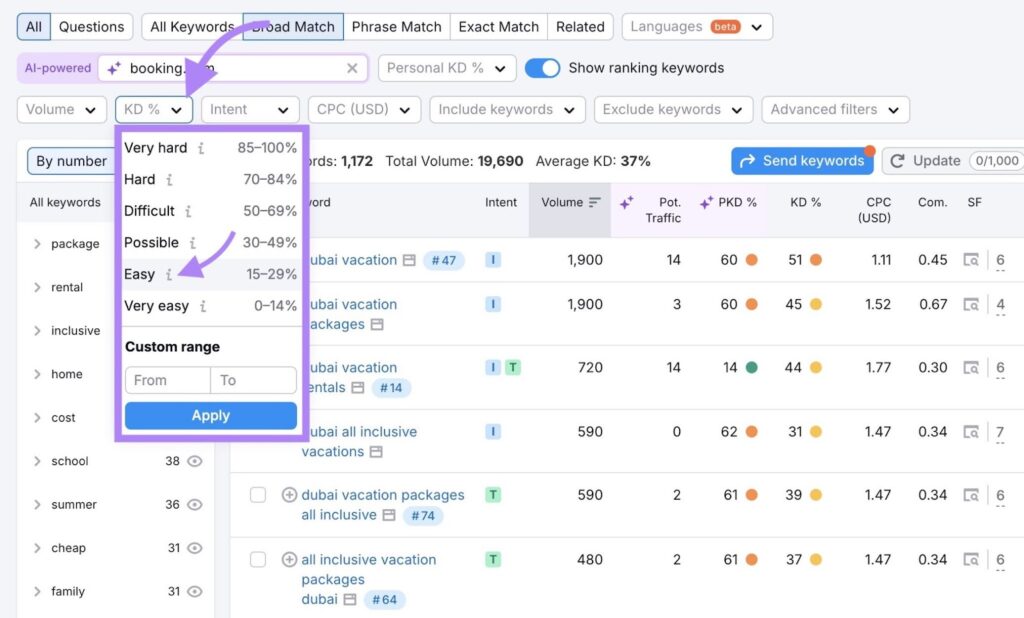
One of the most important parts of my strategy was understanding that travelers do not always begin their search with a hotel.
Someone planning a trip may first search for “best places to visit in [City].” After researching the destination, they may search for “things to do in [City].” Later, they may look for “best hotels near [Attraction].” Finally, they may search for the hotel name, read reviews, compare options, and make a booking.
This means that a hotel website has an opportunity to become useful throughout the entire travel journey.
I focused on developing content that could answer travelers’ questions before they were ready to book. Destination guides, attraction-related content, local travel information, and useful planning resources can introduce a business to potential guests at an earlier stage.
The important part is making sure that this content genuinely helps the reader rather than simply being created to insert keywords.
Connecting Travel Content With Hotel Pages
Creating travel content is only one part of the strategy. The next challenge is connecting that content with the hotel’s commercial pages in a natural way.
For example, an article about the best attractions in a city can naturally introduce the benefits of staying in a convenient location. From there, a relevant link can take the visitor to the hotel’s location or accommodation page.
This creates a natural journey from information to consideration and eventually to booking.
The visitor does not feel like they are being pushed into a sales page. Instead, the website provides useful information first and then gives them an appropriate next step when they are ready.
Improving the Hotel’s Local Presence
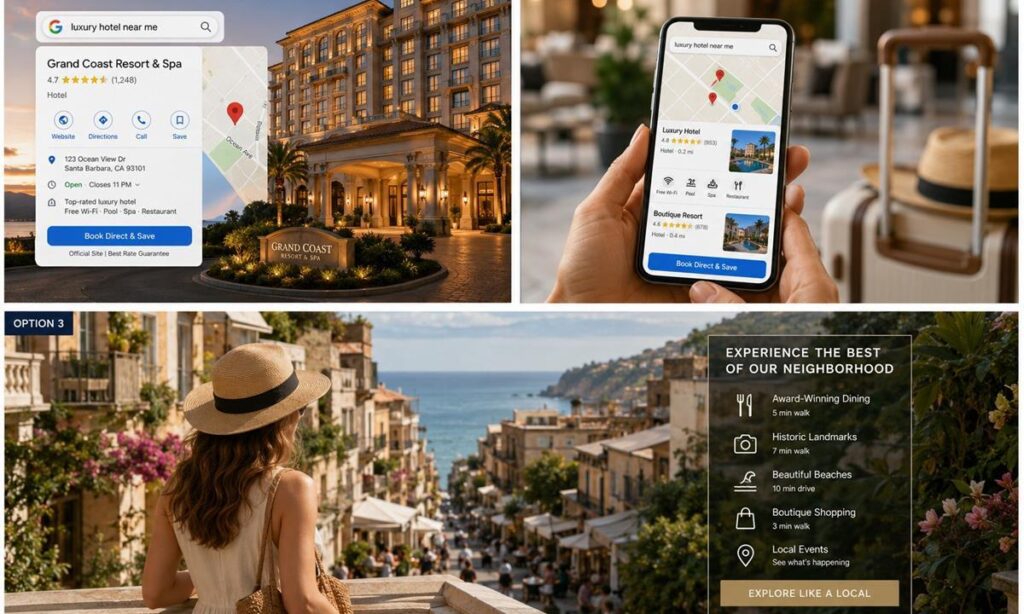
Local SEO was another important part of the campaign. For a hotel, Google Business Profile can be an important source of discovery because travelers often use Google Maps and local search when comparing accommodation options.
I focused on making sure that the business information was accurate and consistent across its online presence. Details such as the business name, address, phone number, website, category, photographs, and other relevant information should accurately represent the real business.
The objective was not to manipulate local search results. Instead, the goal was to create a clear and trustworthy online presence so that potential guests could easily understand the business before visiting the website or making a booking.
Building Trust Through Better Content
Trust is especially important in the hotel and travel industry. Before booking a room, people often want to know what previous guests experienced. They want to understand whether the rooms were comfortable, whether the location was convenient, whether the staff were helpful, and whether the overall experience matched their expectations.
For this reason, I considered trust as an important part of the SEO strategy rather than treating it as something separate from SEO.
Real customer reviews, accurate business information, authentic photographs, clear hotel information, and useful local content can all help create a stronger sense of confidence.
From an E-E-A-T perspective, the website should demonstrate real experience and knowledge rather than relying on generic travel content. Travelers should be able to understand why the business is knowledgeable about its location and what makes the experience authentic.
Improving the User Experience
SEO does not end when someone clicks on a search result. The website still needs to convince the visitor to stay and take action.
For a hotel website, this is particularly important on mobile devices. A traveler may be searching from their phone while already on the road or while planning a trip from another location.
I therefore considered the overall user experience alongside the SEO work. Important information should be easy to find, the website should load properly, and visitors should be able to quickly understand the hotel’s location, accommodation options, amenities, contact information, and booking process.
A visitor should not have to search through multiple pages just to find out where the hotel is or how to make a reservation.
The Importance of E-E-A-T in Hotel SEO
E-E-A-T was also an important consideration throughout the content strategy. In the travel industry, users are making decisions based on trust, experience, and the quality of information available to them.
I believe that good travel content should feel like it was created by someone who actually understands the destination and the questions travelers have. Instead of producing generic paragraphs that could apply to any city, the content should provide specific, useful, and realistic information.
This is where personal expertise and genuine business experience can make a difference. A hotel that knows its local area can provide information that a generic travel website cannot easily reproduce.
As Rupam Golder, my focus was therefore not simply on making pages search-engine friendly. I wanted the content to be useful enough that a real traveler could read it and feel more confident about planning their trip.
The Result of a Local-First SEO Strategy
The biggest improvement from this approach was the creation of a stronger connection between the hotel’s website, its location, and the search behavior of potential travelers.
Instead of relying on a small number of broad keywords, the website was positioned to target a wider range of searches related to hotels, local attractions, accommodation, and destination information.
The strategy also created a stronger relationship between informational content and commercial hotel pages. This allowed visitors to discover the business through different types of searches and move naturally from travel research toward accommodation consideration.
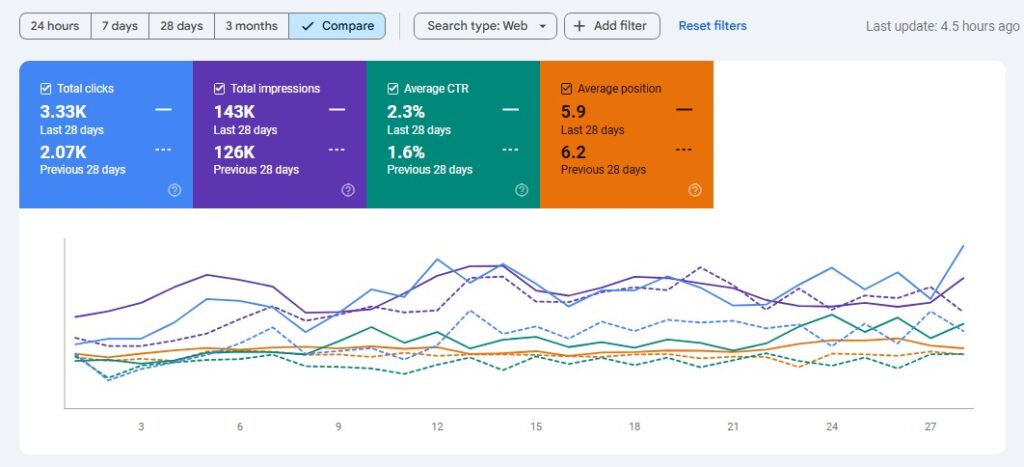
For a real campaign, performance should be measured through verified data from sources such as Google Search Console, Google Analytics, Google Business Profile, and booking or lead tracking. Metrics such as organic clicks, impressions, local visibility, relevant keyword growth, hotel-page traffic, and booking-related actions can provide a much clearer picture of SEO performance than rankings alone.
What I Learned From This Project
One of the biggest lessons from hotel SEO is that local search visibility is not created by simply adding a city name to a page.
Real local SEO requires understanding the destination, the customer, the search intent, and the reason someone would choose one hotel over another.
Travelers are looking for more than a room. They are looking for convenience, location, information, confidence, and a good overall experience.
That is why I believe the most effective hotel SEO strategies combine local SEO with useful travel content, strong website structure, technical SEO, trust signals, and a good user experience.
Final Thoughts
Hotel and travel businesses have a unique opportunity in local search because travelers are constantly looking for information before making a decision. A well-optimized website can become more than just an online brochure. It can become a useful resource that helps people discover the destination, understand the local area, compare accommodation options, and eventually choose where they want to stay.
My approach as Rupam Golder is to focus on this complete journey rather than treating SEO as a simple ranking exercise. I believe the strongest results come when SEO is built around real users, genuine local relevance, helpful content, and a trustworthy online presence.
For a hotel or travel business, the goal should not simply be to appear on Google. The real goal is to appear at the right moment, for the right traveler, with the right information.
That is the foundation of a sustainable local SEO strategy.