
How I Built a Local SEO and GEO Strategy for a Law Firm
For a local law firm, being visible online is no longer limited to ranking on the first page of Google. Potential clients are searching for legal help at very specific moments in their lives, often using searches such as “personal injury lawyer near me,” “family lawyer in ,” “best criminal defense attorney,” or “law firm near me.”
At the same time, people are increasingly using AI-powered search experiences to ask questions and discover businesses, professionals, and legal information. This means that a modern law firm needs a search strategy that goes beyond traditional keyword optimization.
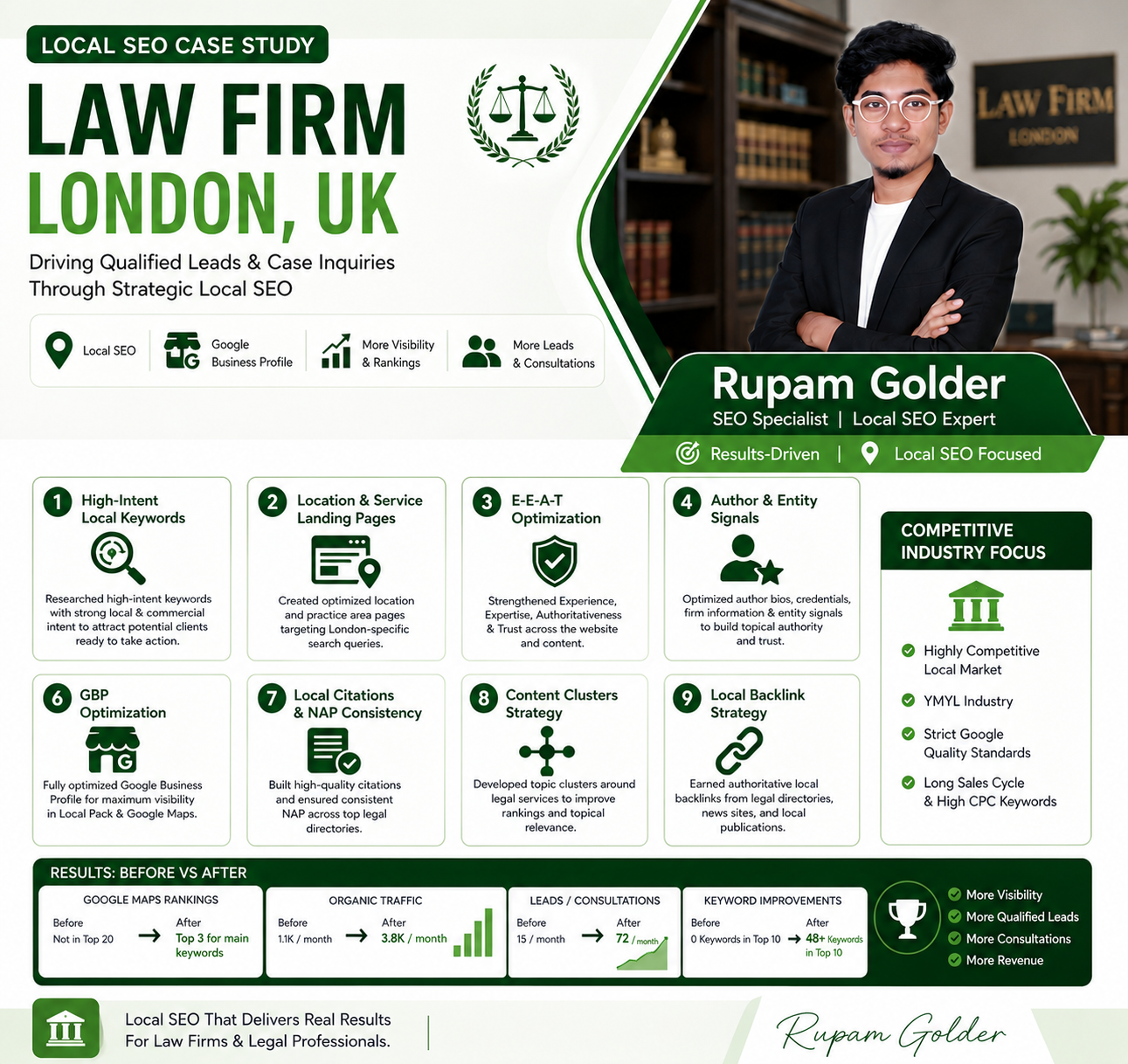
As an SEO professional, I, Rupam Golder, worked on a local-first strategy designed to improve a law firm’s visibility across traditional search, local search, and emerging AI-driven search experiences. The focus was not simply on ranking individual pages. The objective was to build a trustworthy digital presence that could help potential clients discover the firm when they were actively looking for legal assistance.
Understanding the Law Firm’s SEO Challenges
The first step was understanding the difference between ordinary website traffic and qualified legal leads.
A law firm’s potential clients usually have very specific needs. Someone searching for “what is a personal injury claim” is looking for information, while someone searching for “personal injury lawyer near me” is much closer to contacting an attorney.
This difference in search intent became an important part of my strategy.
I analyzed the firm’s services, target locations, competitors, existing website structure, content quality, local search presence, and the types of queries potential clients were likely to use. Instead of treating the entire website as one SEO project, I divided the strategy around individual legal practice areas and geographic intent.
Developing the Keyword and Search Intent Strategy
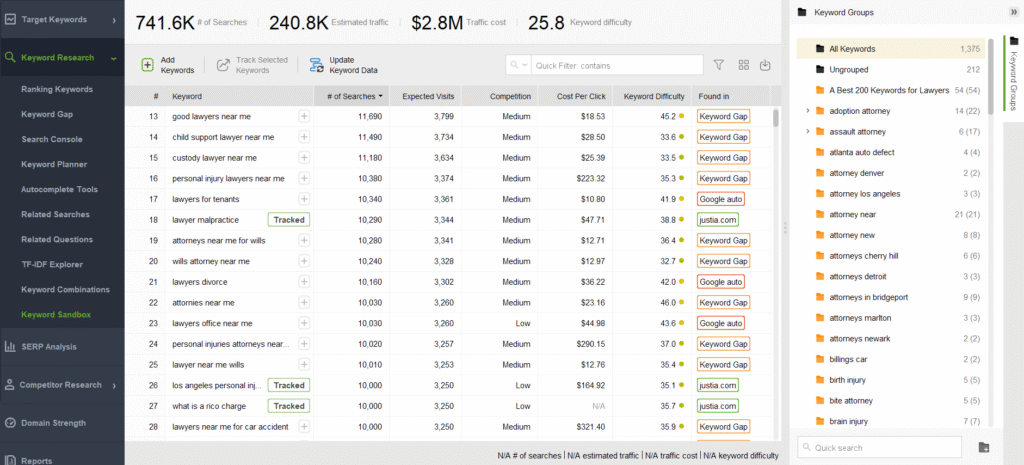
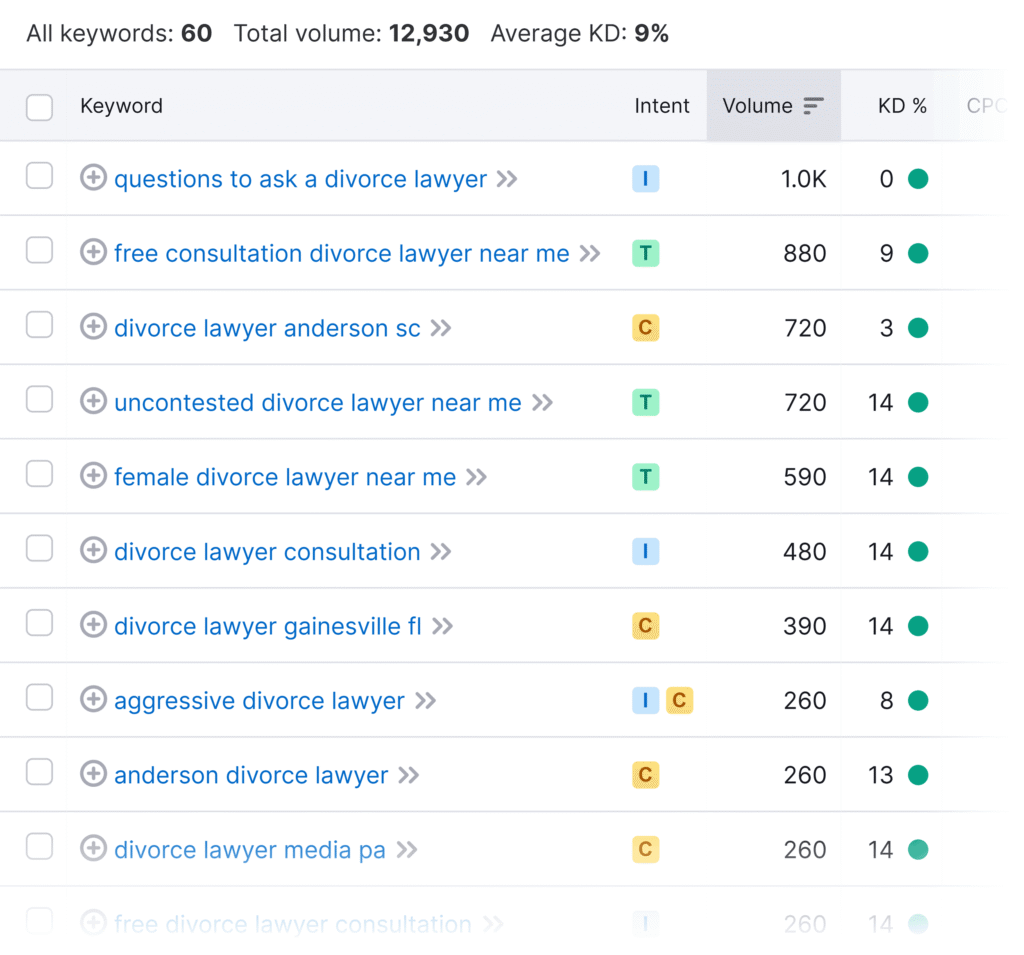
I started the keyword research process by identifying the firm’s core practice areas and connecting them with local search intent.
For example, if the firm handled personal injury cases, the strategy could target searches around personal injury lawyers, accident attorneys, car accident lawyers, injury claims, and related legal questions in the firm’s service area.
The same approach could be applied to other practice areas such as family law, criminal defense, immigration, employment law, estate planning, or business law.
However, I did not rely only on high-volume keywords. I also looked at the intent behind the search.
A query such as “family law” is broad and can have many meanings. A search such as “family lawyer in ” has stronger local intent. A search such as “divorce attorney near me” is even more commercially relevant because the user may already be looking for professional assistance.
This helped me prioritize pages and content based on the likelihood of generating meaningful business opportunities.
Rebuilding the Website Around Practice Areas
One of the key steps was creating a clearer website structure around the firm’s actual legal services.
Instead of expecting a single services page to rank for every legal term, I focused on developing dedicated pages for important practice areas.
A properly structured law firm website might have a main practice area section followed by individual pages for services such as personal injury, car accident claims, family law, criminal defense, or other areas handled by the firm.
Each page was designed around a specific user need rather than simply being created as a keyword landing page.
The purpose was to help Google understand the firm’s areas of expertise while also giving potential clients clear and useful information about the legal service they were looking for.
Creating Strong Local Landing Pages
Local relevance was another major part of the campaign.
For a law firm, location can be extremely important because clients usually want an attorney who serves their particular city, county, or surrounding area.
I therefore worked on creating location-focused content where there was a genuine business reason to target that location.
For example, instead of creating dozens of nearly identical pages with only the city name changed, I focused on making local pages genuinely useful.
A good location page should explain the firm’s service area, the types of legal matters it handles, how potential clients can contact the firm, and other relevant local information.
The goal was to create pages that could satisfy both search intent and the user’s need for confidence.
Google Business Profile and Local SEO
Google Business Profile optimization was an important part of the local SEO strategy.
For a law firm, accurate business information is essential. I worked around the firm’s local presence by focusing on accurate business details, appropriate categories, service information, location relevance, photographs where appropriate, and a consistent representation of the firm across the web.
Local SEO was not treated as a separate activity from the website.
I worked to create consistency between the firm’s website, business profile, citations, local pages, contact information, and other online references.
This helps create a clearer digital identity for the business.
NAP Consistency and Local Citations
Another part of the local SEO process was reviewing the firm’s business information across relevant online directories and legal/business platforms.
The name, address, and phone information should remain accurate and consistent wherever the firm is legitimately listed.
I also considered the quality and relevance of citations rather than trying to create as many listings as possible.
For a law firm, being represented accurately on relevant legal and local platforms can contribute to a stronger overall online presence.
The objective was quality, consistency, and trust rather than artificial volume.
Building Topical Authority Around Legal Services
Legal SEO requires more than publishing short articles around random keywords.
A law firm needs to demonstrate knowledge around the subjects it actually practices.
I therefore worked on building topic clusters around the firm’s core practice areas.
For example, a personal injury content cluster could include information about different types of accidents, injury claims, legal processes, common questions, documentation, settlements, and when someone may need to speak with an attorney.
The important point was to organize the information logically and connect related pages through internal linking.
This allowed the website to develop deeper topical coverage instead of having isolated blog posts that had no relationship with the firm’s core services.
Improving Internal Linking
Internal linking was another important step in the strategy.
I used contextual internal links to connect informational content with relevant practice-area pages.
For example, an article explaining what someone should do after a car accident could naturally connect to a relevant car accident attorney page.
Similarly, an informational article about the divorce process could link to the firm’s family law service page when appropriate.
This creates a natural journey from information to professional assistance.
It also helps search engines understand the relationship between the firm’s informational content and its core commercial pages.
E-E-A-T for a Law Firm
E-E-A-T was one of the most important considerations in the overall strategy.
Legal information is a high-trust subject. People are often making serious decisions based on what they read online, so the website needs to demonstrate who is providing the information and why that information should be trusted.
I focused on strengthening signals around the firm’s real-world expertise and professional identity.
Attorney biographies, professional experience, practice areas, credentials, accurate contact information, author information, firm details, and genuine client-focused content all contribute to a stronger trust experience.
The content also needed to avoid exaggerated claims.
Instead of making unsupported statements such as “the best lawyer in the city,” the strategy focused on communicating the firm’s actual experience, areas of practice, and ability to help potential clients understand their options.
Adding Attorney and Author Information
Another important element was making it clear who was behind the legal content.
For legal websites, anonymous articles can make it difficult for readers to understand the source of the information.
Where appropriate, content can benefit from clear authorship and attorney review information.
This creates a stronger connection between the information being published and the professionals who have relevant legal expertise.
From an SEO perspective, this also supports the broader goal of demonstrating expertise and trust.
Technical SEO Improvements
Alongside content and local SEO, I also worked through the technical foundation of the website.
This included reviewing crawlability, indexation, page structure, URLs, metadata, heading hierarchy, internal linking, mobile usability, page performance, redirects, canonicalization, and other technical elements that could affect the website’s ability to perform in search.
The goal was to make sure that search engines could efficiently discover and understand the firm’s important pages.
At the same time, technical SEO was approached from the user’s perspective.
A potential client who is searching for legal help should be able to quickly find the firm’s services, understand what the firm handles, and contact the appropriate office.
GEO: Optimizing for AI and Generative Search
One of the newer areas I incorporated into the strategy was GEO, or Generative Engine Optimization.
Traditional SEO is largely focused on helping pages appear in search results.
GEO focuses more on making a business and its content understandable and useful within AI-powered search and answer experiences.
People increasingly ask AI systems questions such as:
“Who are the best personal injury lawyers in my area?”
“What should I do after a car accident?”
“When should I contact a divorce attorney?”
“What type of lawyer handles this situation?”
These questions are different from traditional short-tail keyword searches.
Instead of optimizing only for exact keyword phrases, I worked on creating content that clearly answers real questions and establishes the firm’s expertise.
Creating Answer-Focused Legal Content
For GEO, I focused on making important information easy to understand and easy to interpret.
Instead of writing content purely around keyword density, the pages were structured around real questions that potential clients might ask.
For example, an article could clearly explain what someone should consider after an accident, when professional legal advice may be appropriate, what information a person may want to gather, and what factors can affect a legal case.
The content should remain educational rather than pretending to provide individualized legal advice.
This approach creates content that can be useful to both traditional search users and AI-driven search systems.
Strengthening Entity and Brand Signals
GEO also requires thinking about the business as an entity rather than just a collection of keywords.
I worked on making the firm’s identity clearer across its website and relevant online presence.
The firm name, attorneys, practice areas, location, professional information, and business details should form a consistent digital footprint.
When information about a business is clear and consistent across multiple trustworthy sources, it becomes easier for search systems to understand what the organization is, where it operates, and what it specializes in.
This is particularly important as search experiences become more conversational.
Using FAQs for SEO and GEO
Frequently asked questions were another useful part of the content strategy.
Legal clients naturally have many questions before contacting an attorney.
Instead of hiding those answers inside long paragraphs, I worked toward making important questions easy to identify and understand.
Questions such as “How long do I have to file a claim?” or “What should I do after an accident?” can be addressed in dedicated sections or articles, depending on the subject.
The answers should be carefully written, factually responsible, and reviewed where necessary because legal rules can vary by jurisdiction and may change over time.
This approach helps the website become a useful information resource rather than simply a collection of sales pages.
Building a Stronger Local Reputation
Local reputation is another important part of law firm SEO.
Potential clients often compare several attorneys before making contact.
Genuine reviews, professional profiles, local mentions, relevant citations, community involvement, and consistent business information can all contribute to a stronger online reputation.
I treated reputation building as a long-term process rather than a quick link-building exercise.
The objective was to create a digital presence that accurately reflected the real-world law firm.
Link Building With Relevance and Trust
I also considered backlinks as part of the broader authority strategy.
However, the focus was not on purchasing large quantities of low-quality links.
For a legal business, relevance and trust are much more valuable.
Potential opportunities can include legitimate local publications, professional organizations, relevant industry resources, community organizations, legal directories, partnerships, interviews, and genuinely useful resources.
The principle was simple: build references that make sense for the business rather than links that exist only for SEO.
Improving Conversion Paths
Once someone reaches a law firm’s website, the next challenge is converting that visitor into a potential client.
I therefore considered the website’s conversion experience alongside SEO.
The contact information should be easy to find. Practice areas should be clearly explained. Attorney information should be accessible. Contact forms should be simple. Mobile visitors should not have to search through the website to find a phone number.
The purpose of SEO is to bring qualified people to the website.
The website then needs to make it easy for those people to take the next appropriate step.
Measuring the Campaign
I believe that law firm SEO should be measured using more than keyword rankings.
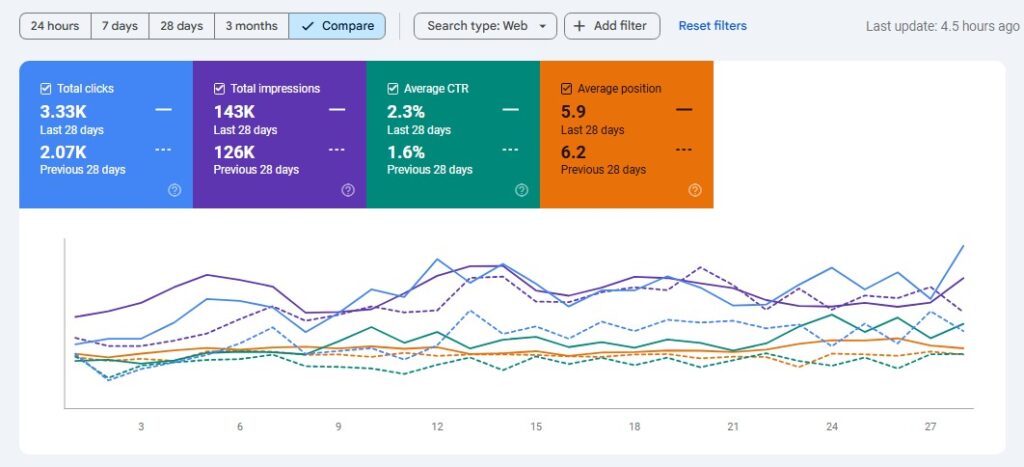
Search Console data can help evaluate impressions, clicks, queries, and landing-page performance. Analytics can provide additional information about user behavior, while call and form tracking can help connect organic visibility with actual inquiries.
Local SEO performance can also be evaluated through visibility in relevant local searches and the firm’s Google Business Profile performance.
For GEO, measurement is more challenging because AI-generated answers do not always provide the same traditional metrics as Google Search.
Therefore, the focus is also on strengthening the firm’s overall authority, entity clarity, content quality, and visibility across trustworthy sources.
My Overall SEO and GEO Approach
As Rupam Golder, I approach law firm SEO as a combination of technical optimization, local search strategy, content development, authority building, trust improvement, and conversion optimization.
The strategy begins with understanding what potential clients are searching for.
Then I connect those searches with the firm’s actual services and locations.
From there, I build useful content, strengthen the website structure, improve local signals, develop topical authority, and make the firm’s expertise more visible.
With GEO, I take that approach one step further by considering how people ask questions in conversational and AI-powered search environments.
The goal is not to create content for algorithms alone.
The goal is to create information that is genuinely useful, accurate, understandable, and connected to a real professional business.
Final Thoughts
Local law firm SEO requires a high level of trust because potential clients are often searching during important and sometimes stressful moments in their lives.
A strong strategy therefore needs to go beyond keywords.
It needs to demonstrate expertise, establish local relevance, provide useful answers, maintain accurate business information, and make it easy for potential clients to understand what the firm does.
My work as Rupam Golder focuses on bringing these elements together through a combination of Local SEO, technical SEO, content strategy, E-E-A-T, local authority building, and GEO.
The search landscape is changing, but one principle remains important: businesses that provide genuinely useful information and establish a clear, trustworthy identity have a stronger foundation for long-term visibility.
For a local law firm, the ultimate goal is not simply to rank for a keyword.
It is to become a credible and recognizable resource when the right person is searching for the right legal help in the right location.