
Introduction
Search engines are no longer relying only on traditional website content to understand what a page is about. As search continues to evolve, structured data, rich search results, and AI-powered search experiences are becoming increasingly important for businesses that want to improve their online visibility.
This case study explains how I approached Schema Markup, Rich Snippets & AI Search Integration for a website with the goal of making its content easier for search engines and AI-powered systems to understand. The focus was not simply on adding schema code to pages. Instead, I worked on creating a structured information system that clearly communicated the meaning, purpose, relationships, and key details of the website’s content.
Made by Rupam Golder — SEO Specialist
My approach was to look at structured data as a communication layer between a website and modern search systems. When search engines can better understand what a page represents, they have a stronger foundation for displaying and connecting that information across search experiences.
Understanding the Initial Challenge
When I started the project, the website had useful content and valuable information, but much of that information was presented primarily for human readers. The search engines could access the content, but there was an opportunity to make important entities and relationships much clearer through structured data.
The website also had several different types of pages, including service pages, category pages, informational content, and other important business-related pages. Each page type had a different purpose, which meant that using the same generic schema everywhere would not be the right approach.
The main challenge was therefore to understand the website’s content architecture first and then determine which structured data types were genuinely relevant to each page.
Auditing the Existing Schema
The first step was a complete review of the website’s existing structured data.
I checked whether schema markup was already present, where it was being used, and whether the markup accurately represented the visible content on each page.
I also looked for common implementation problems such as irrelevant schema types, incomplete properties, duplicate markup, missing relationships, and structured data that did not accurately reflect the page.
My goal was not to add as much schema as possible. Instead, I wanted to make the existing structured information more accurate, relevant, and useful.
Building a Page-Level Schema Strategy
One of the most important parts of the project was deciding which schema type should be associated with which page.
Different pages communicate different types of information. A business page may need organization-related structured data, while an article has a completely different purpose. A product page, service page, FAQ section, or breadcrumb navigation also communicates different information.
I therefore developed the schema strategy around the actual purpose of each page rather than applying a one-size-fits-all solution.
Matching Schema With Search Intent
The schema implementation was aligned with the content and intent of each page.
For example, product-related pages could communicate information about the product, while article pages could provide structured information about the author, publication, and content. Breadcrumb markup could help describe the page’s position within the website hierarchy.
This page-level approach helped keep the structured data more meaningful and reduced the risk of adding markup that had little connection to the actual page.
Implementing Organization and Business Schema
For important business information, I worked on establishing clearer entity-level signals.
Relevant details such as the business name, website, logo, contact information, and other appropriate properties were structured where applicable.
The purpose was to help search engines understand that different pieces of information across the website referred to the same underlying business entity.
This becomes particularly useful when a website has information distributed across multiple pages and platforms.
Implementing Article and Author Structured Data
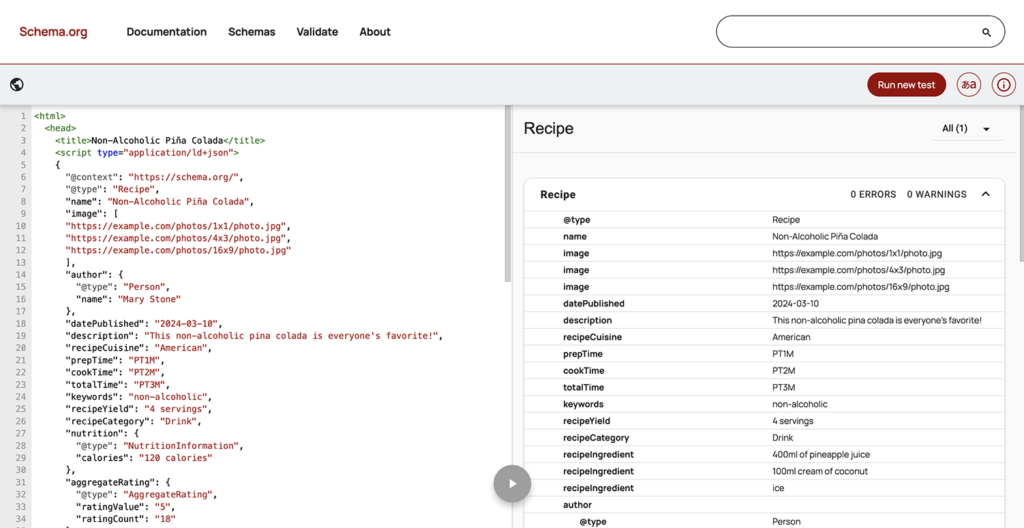
For informational content, I focused on making the relationship between the article, author, website, and publication information clearer.
Article-related structured data can help search engines understand the nature of the content and identify important information such as the headline, author, publication date, and main image when those properties are appropriate.
Author information was also considered as part of the broader entity structure.
For me, this was especially important because modern search increasingly depends on understanding not only what a piece of content says, but also who created it and what entity is associated with it.
Product and E-commerce Schema
For e-commerce pages, structured data can be particularly valuable because product pages contain information that users may want to see directly in search results.
Where appropriate, I reviewed product-related structured data and focused on information such as product names, descriptions, pricing, availability, and other relevant attributes.
The goal was to ensure that the structured data accurately reflected what users could actually see on the page.
I also paid attention to consistency between the structured data and visible content because structured data should not be used to communicate information that users cannot reasonably find on the page.
Breadcrumb Schema and Website Hierarchy
Breadcrumbs were another important part of the implementation.
For websites with multiple categories, subcategories, and deeper page structures, breadcrumbs can provide useful context about where a page sits within the overall website hierarchy.
I implemented and reviewed breadcrumb structured data where appropriate and ensured that the hierarchy represented the actual navigation structure.
This created a clearer relationship between different levels of the website and helped communicate the site’s architecture in a structured format.
FAQ and Other Structured Content
Where the website contained genuine frequently asked questions, I reviewed whether structured data was appropriate for those sections.
The important point here was to avoid adding FAQ markup simply because it was technically possible.
The questions and answers needed to exist as visible, useful content on the page and accurately represent what the structured data described.
This approach helped keep the implementation focused on quality and relevance rather than schema quantity.
Improving Rich Search Visibility
Another objective of the project was to improve the website’s eligibility for enhanced search features where supported.
Structured data can provide search engines with additional context about a page and, in some cases, can make pages eligible for certain enhanced search appearances.
However, I did not treat rich results as guaranteed outcomes.
Instead, I focused on implementing valid and relevant structured data while keeping the underlying page content strong.
The combination of high-quality content, proper technical implementation, and accurate structured data creates a much stronger foundation than relying on schema alone.
Connecting Structured Data With AI Search
One of the most interesting parts of this project was looking beyond traditional Google search.
Search behavior is increasingly moving toward AI-powered experiences where users ask complete questions and expect direct, contextual answers.
AI search systems need to understand entities, relationships, context, and the meaning behind content. This makes clear website structure and well-organized information increasingly valuable.
My goal was therefore to make the website’s important information easier for modern search systems to interpret.
Preparing Content for AI-Powered Search
AI search optimization is not about trying to “trick” an AI system into recommending a website.
Instead, I focused on improving the clarity and consistency of the website’s information.
Important entities were made more consistent across relevant pages, business information was structured clearly, content was organized around specific topics, and relationships between different pieces of information were strengthened.
This creates a clearer information environment that can potentially help search systems understand the website more accurately.
Entity Optimization and Knowledge Relationships
A major part of modern search optimization is entity understanding.
Search engines and AI systems need to distinguish between a company, person, product, service, location, article, and other entities.
I therefore reviewed how important entities were represented across the website and how they were connected.
For example, a business could be connected with its website, services, author information, locations, and relevant content.
These relationships help create a more coherent digital identity rather than treating every page as an isolated document.
Improving Author and Brand Signals
I also considered the importance of consistent author and brand information.
For content-driven websites, clearly identifying who created the content and what organization or person is behind the website can provide useful context.
As Rupam Golder, I believe modern SEO should focus heavily on building a recognizable and consistent digital entity rather than simply publishing large amounts of content.
That means keeping names, descriptions, profiles, business information, and relevant references consistent wherever possible.
Technical Validation
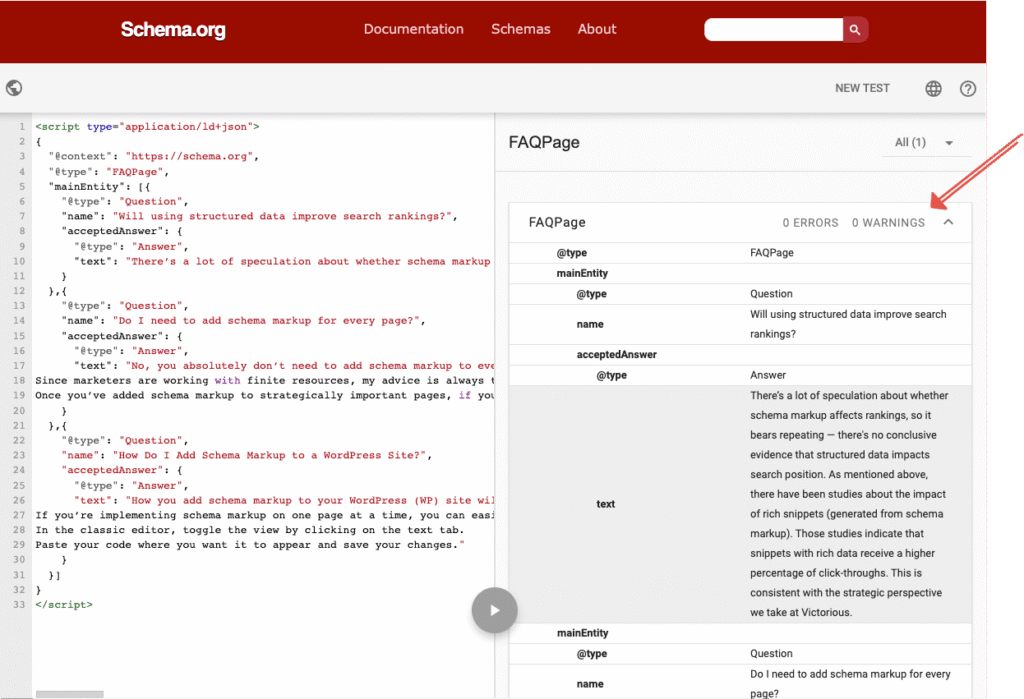
After implementing the structured data, I reviewed the markup for errors and inconsistencies.
The validation process focused on making sure that the schema was technically valid, logically structured, and connected to information that was actually present on the page.
I also reviewed whether different schema elements were creating unnecessary duplication or conflicting signals.
Technical validation was an important step because even a well-planned schema strategy can become ineffective if the implementation contains errors.
Monitoring Search Performance
After implementation, I monitored the website’s organic search performance and relevant search appearance signals.
I looked at changes in impressions, clicks, CTR, indexed pages, keyword visibility, and search appearance where applicable.
I also monitored the technical health of the structured data rather than assuming that implementation alone meant the project was complete.
Search engines continuously process and reevaluate websites, so structured data should be treated as an ongoing SEO asset rather than a one-time task.
The Biggest Lesson From the Project
The biggest lesson from this project was that schema markup is not a shortcut to higher rankings.
Adding structured data does not automatically make a weak page rank better.
The real value comes from combining structured information with strong content, clear website architecture, consistent entities, solid technical SEO, and a trustworthy overall online presence.
Schema helps communicate what information means. It does not replace the quality of that information.
My Approach to AI Search Optimization
As Rupam Golder, my approach to AI search optimization is focused on clarity, consistency, and authority.
Rather than trying to manipulate AI-generated answers, I focus on making the website’s information easy to understand and verify.
This includes improving entity consistency, creating well-structured content, strengthening internal relationships between pages, implementing relevant structured data, and ensuring that important business information is clear across the digital ecosystem.
The goal is to build a website that can be understood not only by traditional search engines but also by newer search experiences powered by AI.
Final Thoughts
Schema Markup, Rich Snippets & AI Search Integration represent an important evolution in modern SEO.
Traditional SEO often focuses heavily on keywords, rankings, and backlinks. While these remain important, search engines are becoming increasingly sophisticated at understanding entities, context, relationships, and user intent.
Structured data provides a way for websites to communicate this information in a more organized format.
For me, the ultimate goal is not simply to get a rich result or appear in a particular search feature. The bigger objective is to build a strong and understandable digital presence that search engines and AI-powered systems can interpret accurately.
Made by Rupam Golder, this case study reflects my approach to modern SEO: build clear information, strengthen entities, improve technical foundations, and create content that is genuinely useful to people.
As search continues to evolve from traditional blue links toward AI-powered answers and conversational discovery, websites that make their information clear, consistent, structured, and trustworthy will be in a much stronger position to compete for organic visibility.
That is why I consider Schema Markup, Rich Snippets & AI Search Integration an important part of a modern, long-term SEO strategy.